Climate change is real, and travel—particularly flying—contributes significantly to global carbon emissions. Yet the solution isn't to stop traveling; it's to travel differently. Sustainable travel means making conscious choices that minimize environmental and cultural impact while maximizing authentic experience and economic benefit to local communities. This isn't about guilt or sacrifice; it's about traveling smarter, more cheaply, and more meaningfully. This guide explores practical strategies for sustainable travel that actually enhance your experience rather than diminishing it.
Understanding Travel's Environmental Impact
Before addressing solutions, understanding the problem provides context for sustainable choices. The travel industry contributes approximately 8% of global carbon emissions—more than you might expect. Aviation is the primary culprit, accounting for 2-3% of all global emissions. A single transatlantic flight produces carbon emissions equivalent to several tons of CO2 per passenger. For comparison, the global carbon budget per person per year (to limit warming to 1.5 degrees Celsius) is roughly 2.7 tons. A round-trip transatlantic flight uses roughly 40% of that annual budget for one person.
Beyond Carbon: Other Environmental Impacts
Carbon isn't the only environmental concern. Tourism causes water stress in arid regions (Las Vegas, Mediterranean), generates plastic waste, damages fragile ecosystems through over-visitation, and contributes to wildlife disruption. Cruise ships are environmental disaster zones—a single massive cruise ship produces air pollution equivalent to several million cars. Mass tourism overwhelms local infrastructure, leading to water scarcity and waste management crises.
Social and Cultural Impacts
Tourism can commodify local cultures, destroy traditional ways of life, inflate prices for locals, and concentrate wealth in outsiders' hands rather than benefiting communities. When tourism dollars bypass local businesses and flow to international corporations, communities experience tourism's costs without its benefits.
"Sustainable travel isn't about visiting fewer places—it's about visiting differently, so your presence leaves communities and landscapes better rather than worse."
Flying Smarter: Reducing Aviation Emissions
If you're flying, that's the trip's primary environmental impact. Strategies to reduce it matter significantly.
Fly Less Frequently, Travel Longer
The biggest environmental impact is reaching the destination. Once there, additional travel (trains, buses, local movement) contributes less additional carbon than the initial flight. Conversely, frequent short-haul flights accumulate quickly. Instead of taking two-week trips annually, consider fewer longer trips. A two-month trip once per year is more sustainable than monthly weekend flights. This also provides deeper travel experience—you discover local culture and make meaningful connections rather than skimming surfaces.
Choose Direct Flights
Each takeoff and landing burns significant fuel. Connecting flights consume more fuel than direct flights covering the same distance. When flying, choose direct routes. Yes, they might be slightly more expensive, but the environmental benefit justifies the cost for sustainable travelers.
Carbon Offsetting Programs
Most airlines offer carbon offset programs—you pay extra per flight to fund renewable energy projects, reforestation, or emission-reduction initiatives. Offsetting doesn't eliminate impact but redirects carbon cost toward projects attempting to reduce emissions elsewhere. Reputable offset programs (certified by Gold Standard or Verified Carbon Standard) actually fund meaningful projects. Choose airlines with strong environmental commitments and participate in their offset programs.
Alternatives to Flying
For regional travel, trains are dramatically more sustainable than flights. European trains are often faster and cheaper than flying when including airport travel time. Buses are slower but even more sustainable. Combined train-and-bus travel across Europe produces 5-10% of flying's emissions for the same journey. Slow travel by ship, when available, offers minimal environmental impact plus unique experience. These alternatives also provide landscape immersion—seeing the journey rather than just teleporting to the destination.
Slow Travel Philosophy: Why Less Is More
The core of sustainable travel is slow travel—spending longer in fewer places rather than rushing through many destinations. This philosophy delivers practical environmental benefits alongside experiential improvements.
The Environmental Math of Slow Travel
Quick trips require frequent travel days and transit. Three-week trips visiting 6-8 countries involve multiple flights, trains, buses, and hotel changes—logistical emissions stack quickly. Alternatively, spending 3 weeks in 2-3 countries reduces transit dramatically. You might fly once, take trains between regions, and minimize movement. The emissions difference is substantial.
Deeper Cultural Experience
Slow travel allows genuine cultural immersion. Spend a week in one neighborhood, become a regular at a café, understand local rhythms rather than constantly sight-seeking. You notice things tourists miss: how neighborhoods change through different hours, what locals actually do, how communities operate daily. You begin conversations, make friends, and experience places as partially-insider rather than pure tourist.
Better Economics for Communities
Spending money in one community longer benefits that community substantially. Money spent in one café daily for a week (seven visits) supports that café better than money scattered across seven different tourist restaurants. You develop relationships with business owners, support genuine local enterprises, and your money multiplies through the local economy. This is development in its truest sense—supporting communities through sustained economic activity.
Your Travel Experience
Slower travel is objectively more enjoyable. You're less tired, less stressed, more present. You see how neighborhoods change through the day. You can revisit favorite spots and discover new ones. You don't spend entire vacations in airports and trains. You have time to rest, to wander without agenda, to sit and read in a plaza and simply be. This is luxury—not expensive, but genuinely luxurious.
Eco-Friendly Accommodation: Supporting Sustainable Businesses
Where you stay impacts local environment and communities. Conscious choice matters.
Certifications and Verification
Look for certifications like Green Key, EarthCheck, or local equivalents. These indicate hotels meet environmental standards. Research specific practices—water conservation, renewable energy, waste management, local employment. Avoid greenwashing (marketing that overstates environmental commitment). Verify claims: does the hotel actually compost, source renewable energy, employ locals?
Locally-Owned Guesthouses
Small family-run guesthouses often have lower environmental impact than large hotels (fewer unnecessary amenities, less waste, less energy consumption). They almost always benefit local communities—the owner is your neighbor, staff are locals, profits stay in community. These accommodations typically cost less than chain hotels while providing better experience and better economics for your hosts.
Longer Stays vs. Frequent Hotel Changes
Each hotel checkout and check-in triggers cleaning, laundry, and resource use. Staying in one hotel for a week uses fewer resources than checking into four different hotels for two nights each. Weekly or monthly accommodations reduce this environmental impact. Plus, the discounts for longer stays improve your budget, win-win.
Homestays and House Rentals
Sharing a house with locals or renting an apartment puts you in genuine residential spaces, reducing hotel infrastructure impact. You cook meals (smaller footprint than restaurant dining), engage with neighborhood life, and live like a resident rather than tourist. These experiences provide authentic travel unavailable through hotels.
Responsible Food Choices: Eating Sustainably While Traveling
Food represents significant environmental and cultural impact. Smart choices enhance both sustainability and experience.
Local and Seasonal Eating
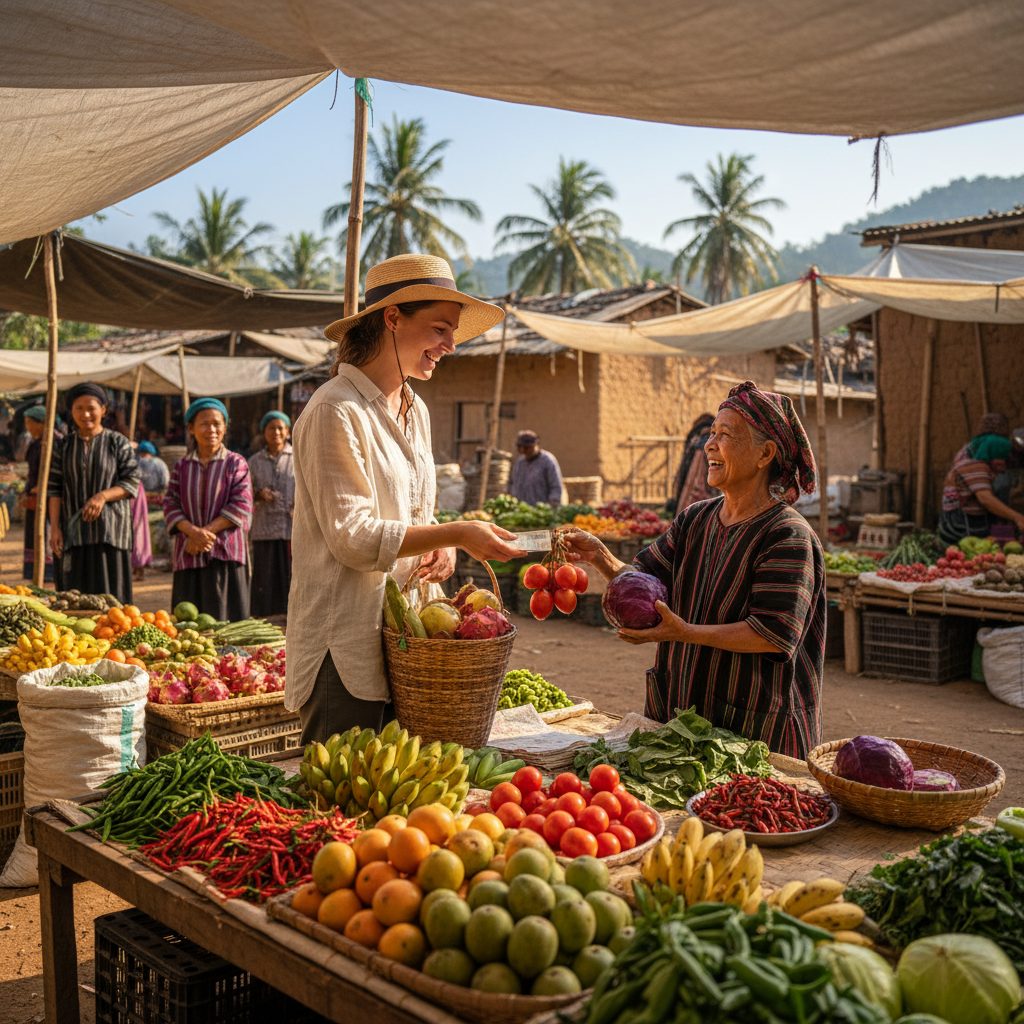
Locally-sourced food has lower environmental impact than imported ingredients. Seasonal food (eaten when naturally available) involves less preservation and transportation. Eating what locals eat—market vegetables, regional proteins, seasonal fruits—connects you to place, supports local agriculture, and usually tastes better. It's also cheaper. Markets rather than restaurants provide the cheapest, most authentic, most local food experience.
Reducing Meat Consumption
Meat production, particularly beef, has substantial environmental impact. This doesn't require vegetarianism—consider "reducetarianism": eating meat occasionally rather than daily, choosing smaller portions, prioritizing local/sustainable meat sources. Many traditional cuisines rely on vegetables, grains, legumes more than meat; exploring these provides authentic experience and environmental benefit. Eating as locals eat naturally leads toward lower-meat diets in many regions.
Avoiding Food Waste
Order appropriate portions. If restaurants serve oversized plates, share or request smaller portions. Finish what you order. This reduces waste, saves money, and usually results in better experience—stopping eating when satisfied rather than overeating is pleasant. Buying food from markets and cooking gives portion control versus restaurant meals.
Plastic-Free Eating
Avoid single-use plastics—bring reusable water bottle (refill from fountains or purchased refills, vastly cheaper than bottled water), bring reusable shopping bags for market purchases, use metal utensils and cups rather than takeout containers when possible. This reduces plastic waste in tourist destinations already overwhelmed with waste.
Transportation: Choosing Lower-Impact Mobility
Within destinations, transportation choices impact carbon significantly.
Public Transportation
Trains, buses, and metros are dramatically more carbon-efficient per passenger than cars. Using public transport is cheaper than rental cars, safer than driving in unfamiliar places, and more sustainable. Most travelers benefit from relying entirely on public transport, walking, and cycling—avoiding cars entirely.
Walking and Cycling
The most sustainable transportation is non-motorized. Walking provides exercise, forces engagement with neighborhoods, allows noticing details missed while driving, and is free. Cycling covers more distance than walking while remaining low-impact and cheap. Many destinations (Amsterdam, Copenhagen, Montreal, Taiwan) have excellent cycling infrastructure. Cycling tours combined with public transport bridges short and medium distances sustainably and cheaply.
Avoiding Overcrowded Tourist Activities
Elephant rides, dolphin shows, and other animal-focused tourism causes animal suffering and environmental impact. Similarly, overtourism (visiting Venice, Barcelona, Machu Picchu during peak season) damages local infrastructure, overwhelms environments, and diminishes experience for everyone. Choose off-season visits, less-famous destinations, or alternative ways to experience nature and culture.
Responsible Wildlife Tourism: Ethical Encounters
Wildlife tourism can either support conservation or harm animals. The distinction matters.
Criteria for Ethical Wildlife Experiences
Good wildlife tourism operators follow strict guidelines: animals are not fed, not touched, not bred in captivity for tourism, not performing tricks, and not confined. Interactions are brief, non-invasive, and respect animals' natural behavior. Legitimate operators employ local guides, contribute to conservation research, and reinvest profits in habitat protection. Avoid operations offering close encounters, animal performances, or unnatural behaviors—these consistently involve animal suffering.
Sanctuaries vs. Tourist Operations
Legitimate wildlife sanctuaries rescue animals and provide natural environments. Poor operations breed animals or capture wild individuals specifically for tourist interaction. Research operators thoroughly—read independent reviews, ask how animals are sourced, where profits go. Reputable sanctuaries are transparent, provide educational information, and prioritize animals' wellbeing over tourist entertainment.
When to Skip Wildlife Tourism
Sometimes the most responsible choice is not visiting. Extremely endangered species experiencing tourism pressure should be observed only by researchers. If a wildlife experience requires unnatural conditions or animal behavior modification, skip it. There are always alternatives—documentaries, zoos with strong conservation programs, or different animal encounters entirely.

Supporting Local Communities: Traveling with Purpose
Tourism's benefits depend on money reaching local people rather than international corporations. Being intentional about spending patterns matters.
Local vs. International Businesses
Eat at family restaurants instead of chain establishments. Stay in locally-owned guesthouses rather than international hotel chains. Buy souvenirs from artisans and craftspeople rather than factory-produced tourist trinkets. Use local guides. Take classes from locals (cooking, language, traditional crafts). These choices cost similar amounts to tourist-oriented options but ensure money benefits actual community members rather than distant corporations.
Fair Wages and Respectful Treatment
When hiring guides or using services, ask about wages and working conditions. Reputable operators pay fair wages, limit working hours, provide benefits. Treat service workers—guides, hotel staff, restaurant servers—with respect and dignity. Tip appropriately. Their labor makes your experience possible; they deserve consideration. In developing countries where wages are lower, generous tips significantly improve lives.
Purchasing Traditional Crafts
Buying directly from artisans supports skill continuation and cultural preservation. Avoid mass-produced "traditional" items. Look for genuine handmade crafts, ask artists about their work, understand stories behind items. This supports culture and creates meaningful exchanges rather than transactional tourism.
Conscious Packing: Reducing Luggage Impact
Lighter luggage means lower fuel consumption in transportation. Beyond environmental impact, packing light improves travel experience—less weight to carry, more flexibility, easier logistics.
Essential Packing Principles
Travel with carry-on luggage when possible—checked bags increase aircraft weight and fuel consumption. Wear each item multiple times. Choose versatile, layered clothing. Bring minimal accessories, cosmetics, and toiletries. Everything available everywhere; buy as needed rather than packing everything upfront. This packing discipline actually improves travel—less stuff to manage, less weight to carry, more freedom.
Eco-Friendly Travel Gear
Invest in reusable items: water bottle, shopping bag, utensils, straws. Bring bar soap instead of liquid (lighter, lasts longer). Choose solid deodorant, solid shampoo, other concentrated products. These choices reduce waste, save weight, and last longer than travel sizes.
Conclusion: Sustainable Travel as Better Travel
Sustainable travel isn't sacrifice—it's consciously choosing to travel in ways that align with your values while actually enhancing experience. Slower travel is more enjoyable, less exhausting, more transformative. Supporting local communities creates meaningful interactions and genuine cultural exchange. Choosing lower-carbon transportation and accommodation reduces your impact without diminishing experience. These choices make travel more authentic, more connected, more meaningful.
Start with one change: commit to longer stays, choose one major flight instead of three short ones, stay in one locally-owned guesthouse instead of three international chains. Each conscious choice adds up. Over time, sustainable travel becomes natural—not a burden but the default way you travel because it actually works better.
"We don't inherit the earth from our ancestors; we borrow it from our children. Travel in ways that leave the planet better than you found it."