Monaco is the second-smallest country in the world — just 2.02 square kilometers of sun-drenched coastline wedged between the French Riviera mountains and the Mediterranean Sea. But don't let the size fool you. This tiny principality packs more glamour, history, and jaw-dropping views per square meter than almost anywhere else on Earth. The best part? You can genuinely see all the highlights in a single well-planned day.
I spent a full day exploring Monaco from morning to night, and this itinerary covers every stop in chronological order — with practical details on costs, timing, and exactly how to get between each spot on foot. Whether you're coming from Nice on a day trip (the most common approach) or staying overnight, this guide will help you make the most of every hour.
Stop 1: Monte Carlo Casino & Casino Square (9:00 AM)
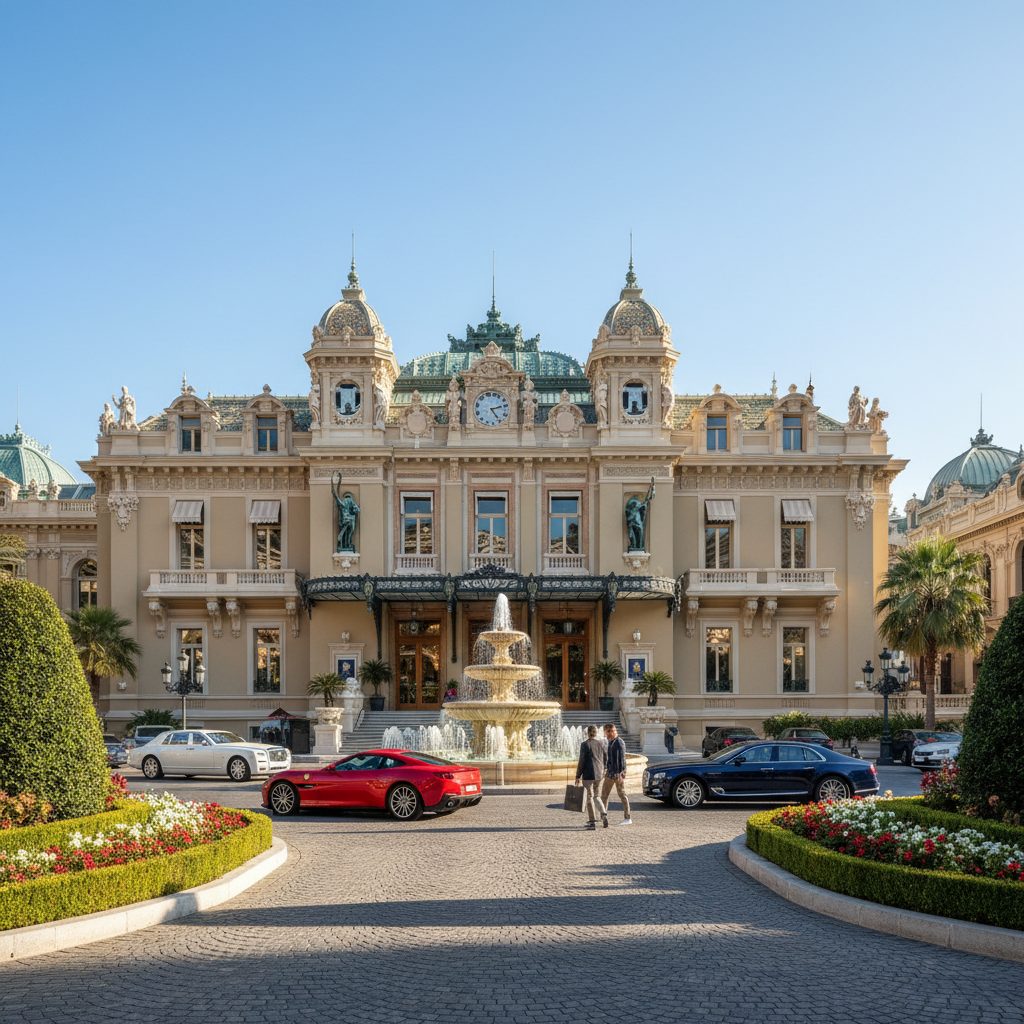
Start your day at the most iconic building in Monaco — the Monte Carlo Casino. Even if you have zero interest in gambling, the building itself is worth the trip. Designed by Charles Garnier (the same architect behind the Paris Opera), the casino is a masterpiece of Belle Époque architecture: ornate cream-and-gold facades, sculpted marble, stained glass, and an entrance hall that feels like walking into a palace.
The Casino Square (Place du Casino) surrounding it is pure Monaco spectacle. On any given morning you'll see Ferraris, Lamborghinis, Rolls-Royces, and Bugattis parked casually outside, with well-dressed visitors posing for photos in front of the fountain. The Hôtel de Paris and the Café de Paris flank the square, and the manicured gardens behind the casino offer a quiet spot with sea views before the crowds arrive.
If you want to go inside the gaming rooms, the casino opens at 2 PM for the main gaming halls (€17 entry, dress code enforced — no shorts, no flip-flops). But the atrium and lobby area is accessible in the morning and gives you a good taste of the interior grandeur. Honestly, the exterior and the square are the real show here.
Stop 2: Japanese Garden (9:45 AM)
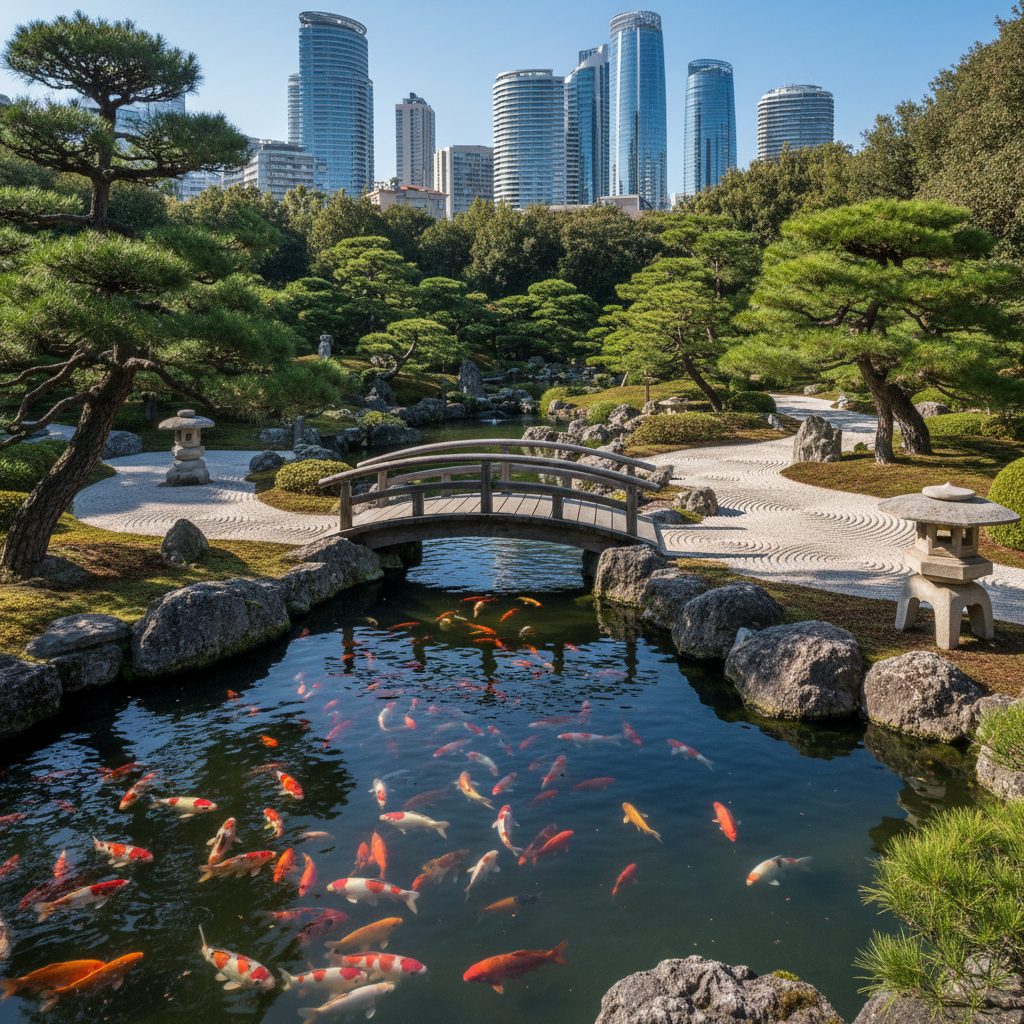
Just a five-minute walk east from Casino Square, tucked behind the Grimaldi Forum convention center, lies one of Monaco's most underrated spots — the Jardin Japonais. This 7,000-square-meter garden was designed by landscape architect Yasuo Beppu and opened in 1994. It's an authentic Japanese zen garden with a koi pond, a waterfall, a traditional tea house, stone lanterns, raked gravel, and carefully pruned pine trees — all just steps from the Mediterranean.
The garden is free to enter and almost always peaceful, even when the rest of Monaco is packed with visitors. It's a perfect counterpoint to the glitz of Casino Square and a genuinely beautiful place to spend 20–30 minutes. The contrast of traditional Japanese aesthetics against the backdrop of Monaco's skyscrapers and the sea is surreal and makes for wonderful photographs.
Stop 3: Walk the F1 Grand Prix Circuit (10:15 AM)
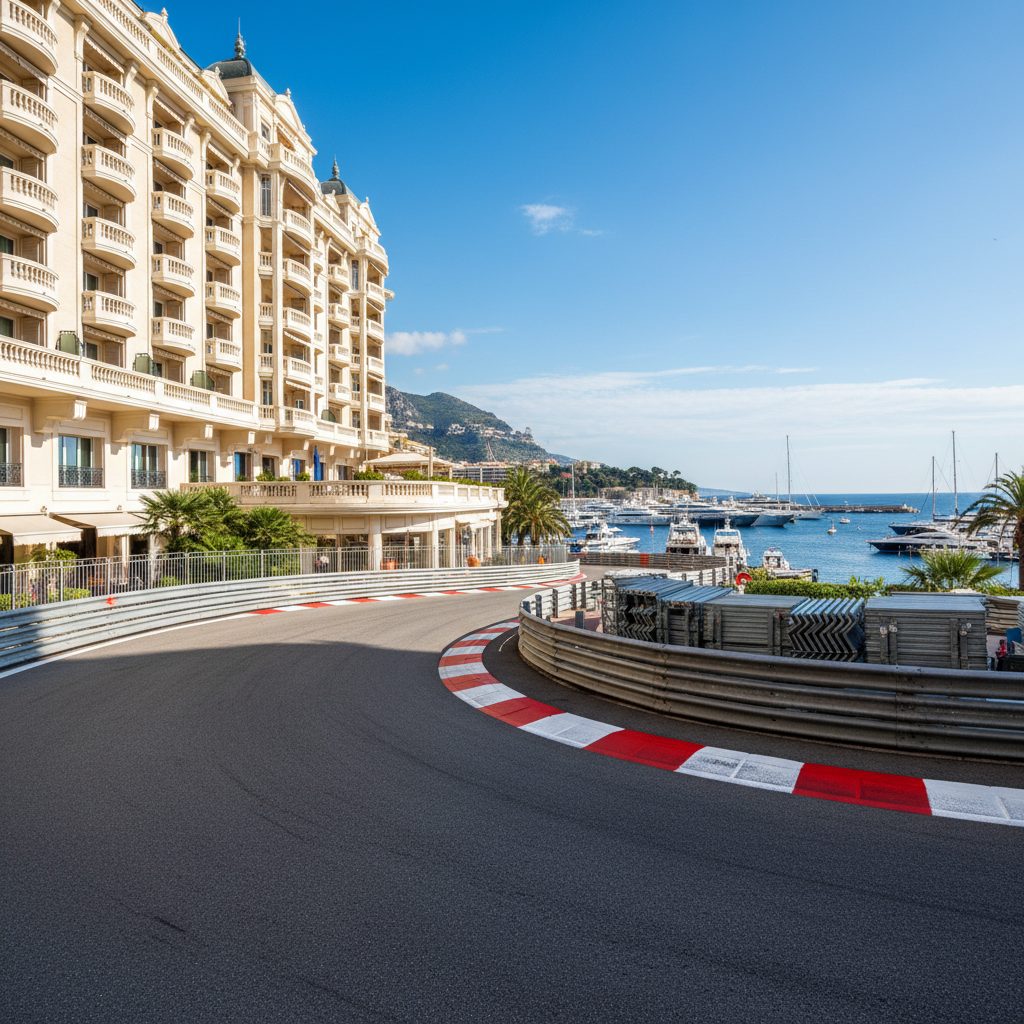
Here's something most visitors don't realize: the Monaco Grand Prix circuit is just the regular city streets. There's no dedicated racetrack — Formula 1 cars literally race past the casino, through a tunnel, along the harbor, and around the swimming pool complex every May. And you can walk the entire 3.337 km circuit in about 40 minutes.
From Casino Square, follow the route downhill through the famous Mirabeau hairpin, past the Fairmont Hotel Hairpin (the slowest corner in F1, where cars creep at just 50 km/h), through the tunnel that runs under the Fairmont, and out onto the stunning waterfront section along the Port Hercule harbor. You'll pass the chicane at the swimming pool, Tabac corner, and the pit straight where cars blast past at over 260 km/h during the race. Throughout the year you can still see the red-and-white rumble strips painted on the road, the pit lane markings, and the metal barriers stacked and ready for race season.
If you're visiting in late May during the Grand Prix weekend, Monaco transforms completely — grandstands are erected everywhere, the harbor fills with superyachts, and the atmosphere is electric. But tickets are extremely expensive (from €100 for a general admission standing area to €2,000+ for premium grandstands).
Stop 4: Port Hercule & the Superyachts (11:00 AM)
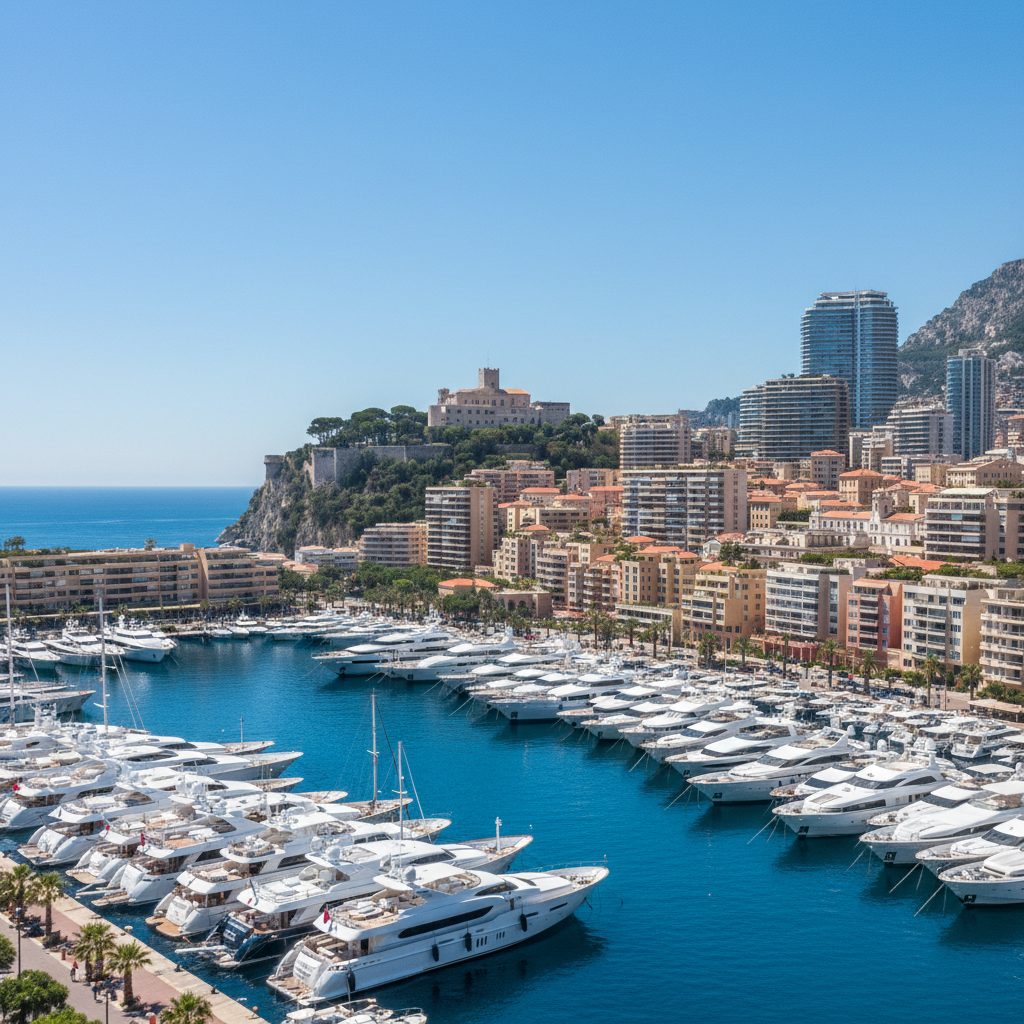
The Port Hercule harbor is Monaco's central marina and one of the most impressive collections of superyachts you'll ever see. Walking along the quayside is like browsing a catalog of floating mansions — multi-deck vessels with helicopter pads, swimming pools, and crews in matching uniforms polishing brass railings. During peak season (May through September), the harbor is packed with vessels ranging from "merely" expensive 30-meter yachts to outrageous 100-meter+ megayachts belonging to some of the wealthiest people on the planet.
The promenade along the harbor is a great place for a leisurely stroll. There's a cluster of restaurants and cafés on the east side of the port (Quai Antoine Ier) where you can sit and people-watch with a coffee. The views across the harbor to Monaco-Ville (the old town perched on the rock) are spectacular and this is one of the best vantage points for understanding Monaco's dramatic geography — a tiny country climbing steeply from the sea up into the hills.
Stop 5: The Condamine Market — Lunch (11:30 AM)
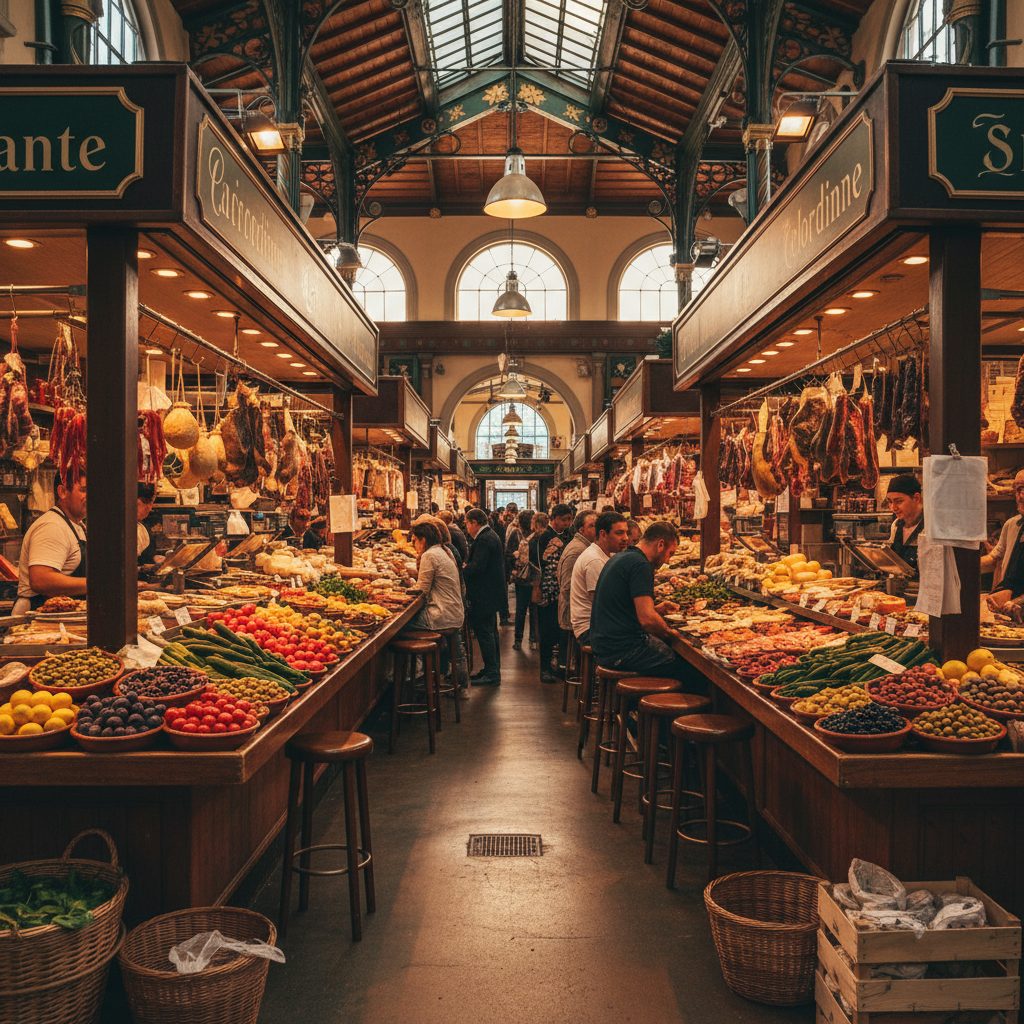
Before heading up to the old town, stop at the Marché de la Condamine — Monaco's main covered food market. Located at the foot of the Rock of Monaco on Place d'Armes, this market is where actual Monégasque residents shop and eat. It's a refreshing change from the polished luxury of Monte Carlo — warm, unpretentious, and full of excellent food at (relatively) reasonable prices.
The market has two parts: the fresh produce section (open mornings only) with stalls selling Mediterranean fruits, vegetables, olives, cheeses, and flowers, and the permanent food court-style restaurants around the edges. This is the best spot in Monaco for an affordable and authentic lunch. Try the socca (a chickpea-flour pancake that's a Riviera specialty), barbajuans (fried ravioli with ricotta and Swiss chard — the national dish of Monaco), or a pan bagnat (a Niçoise-style pressed sandwich with tuna, olives, and vegetables).
Stop 6: Monaco-Ville — The Old Town (12:30 PM)
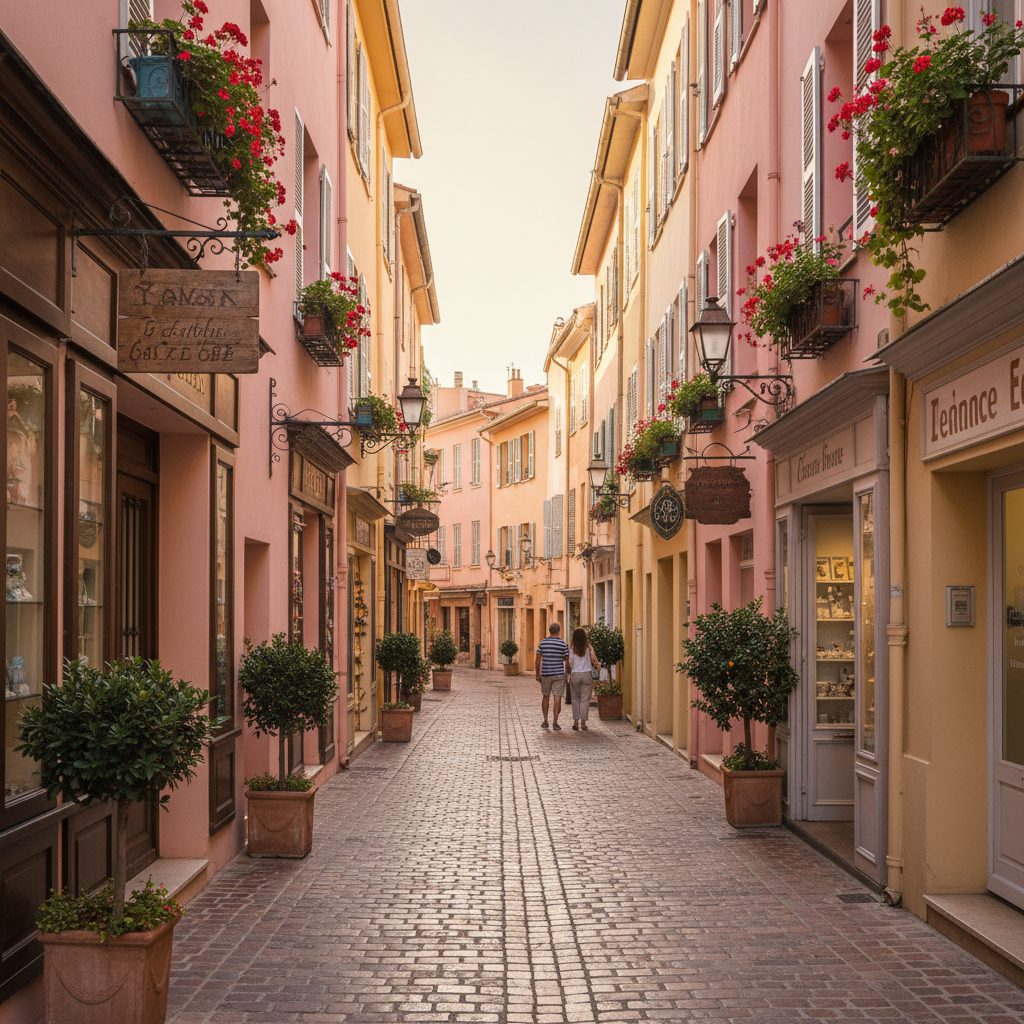
From the market, climb the ramp or take the free public elevator up to Monaco-Ville, also known simply as "The Rock" — the historic heart of the principality, perched on a dramatic promontory 60 meters above the sea. This is the oldest part of Monaco and it feels like a completely different world from the glitz of Monte Carlo: narrow pedestrian lanes, pastel-colored buildings, small shops selling local crafts, and quiet squares shaded by orange trees.
Wander through the cobblestone streets and soak in the atmosphere. The Rue Princesse Caroline is the main shopping lane, lined with souvenir shops and cafés. But the real magic is in the smaller side streets where you can find centuries-old facades, hidden courtyards, and viewpoints that overlook both the harbor and the open Mediterranean. The entire old town is car-free, making it one of the most pleasant places to walk in Monaco.
Stop 7: Prince's Palace & the Changing of the Guard (12:55 PM)
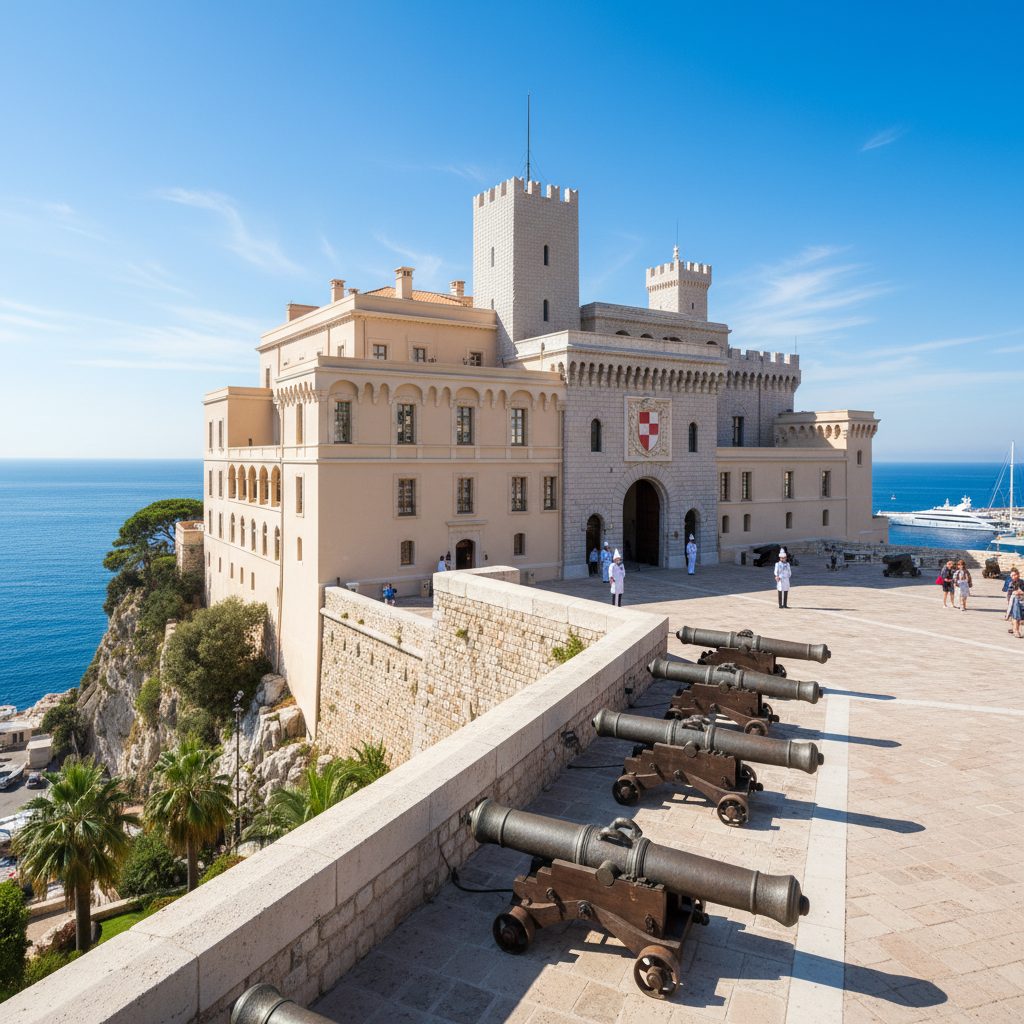
The Palais Princier sits at the highest point of The Rock and has been the official residence of the Grimaldi family — Monaco's ruling dynasty — since 1297. The palace itself is an elegant cream-colored compound with crenellated towers and a wide ceremonial courtyard (Place du Palais) that offers absolutely stunning panoramic views of the harbor, Monte Carlo skyline, and the coastline stretching toward Italy.
Time your arrival for 11:55 AM to catch the Changing of the Guard ceremony at noon — the Carabiniers du Prince (the palace guard) perform a formal changing ritual that's been a daily tradition since the early 1800s. It's brief (about 5 minutes) but photogenic and atmospheric, accompanied by a small military band.
From April through October, you can tour the State Apartments inside the palace (€10), which include the stunning Throne Room, the York Room where England's Duke of York once stayed, and the Palatine Chapel with its collection of religious art. The palace courtyard and the square outside are free to visit year-round and are honestly the highlight — the views alone are worth the climb.
Stop 8: Saint Nicholas Cathedral (1:30 PM)
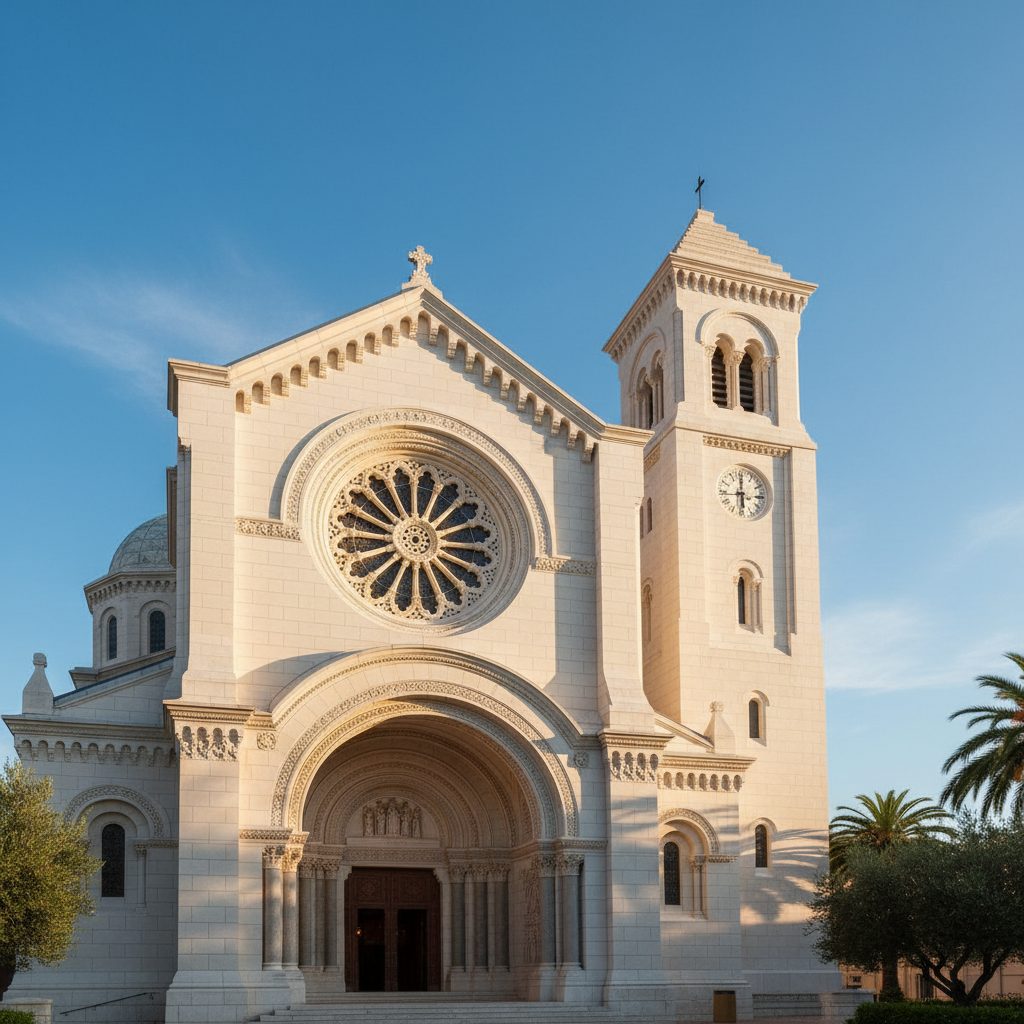
A few minutes' walk from the palace, the Cathédrale de Monaco (also called Saint Nicholas Cathedral) is a beautiful white Romanesque-Byzantine church built in 1875 from white stone quarried from nearby La Turbie. The exterior is impressive, but the interior is what draws most visitors — soaring arches, beautiful altarpieces, and most notably, the tombs of Prince Rainier III and Princess Grace (Grace Kelly), marked by simple stone slabs in the floor near the altar.
The cathedral is free to enter and usually quiet inside. There's something moving about standing in this small, elegant church and seeing the final resting place of Grace Kelly — the Hollywood star who became a real-life princess. Fresh flowers are always placed on the graves by visitors and the royal family. Allow about 15–20 minutes for your visit.
Stop 9: The Oceanographic Museum (2:00 PM)
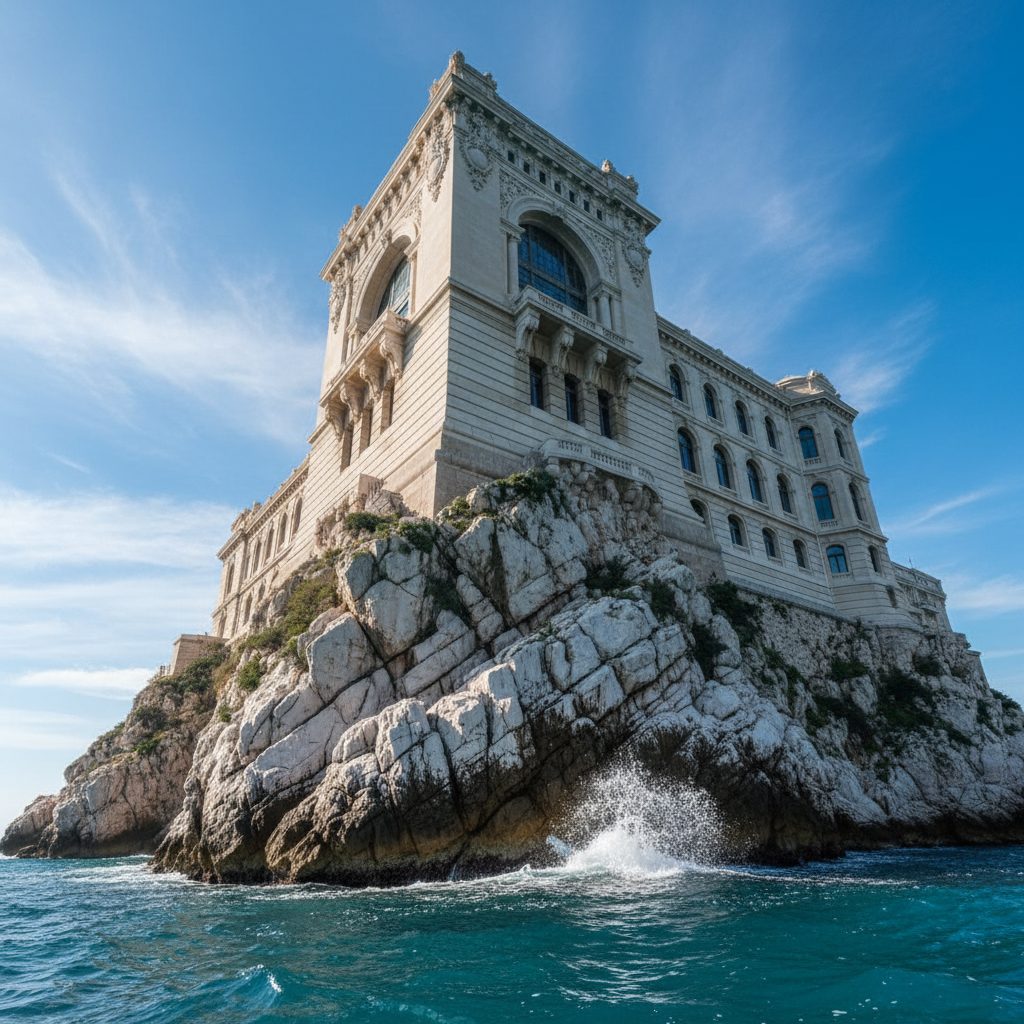
The Musée Océanographique is one of Monaco's absolute highlights and well worth the entrance fee. Founded in 1910 by Prince Albert I (a passionate ocean explorer), this museum sits dramatically on the cliff face of The Rock, its facade dropping 85 meters straight down to the sea. Inside you'll find one of Europe's best aquariums, with over 6,000 specimens across 100 tanks — from Mediterranean species to tropical reef ecosystems and mesmerizing jellyfish galleries lit in ethereal blues and purples.
The building itself is magnificent — a palatial Baroque Revival structure with ornate interiors, including a conference hall with painted ceilings and whale skeleton displays that hang from the rafters. The rooftop terrace offers breathtaking views of the coastline stretching from Italy in the east to the Esterel mountains in the west. Jacques Cousteau served as the museum's director for over 30 years, and his legacy is woven throughout the exhibits.
Plan to spend 1–1.5 hours here. The shark lagoon, the touch pool (where kids and adults can handle starfish and sea urchins), and the coral reef tanks are the biggest draws. The lower levels house a collection of marine science instruments and Prince Albert I's original research vessels and equipment.
Stop 10: Jardins Saint-Martin — Cliffside Walk (3:30 PM)
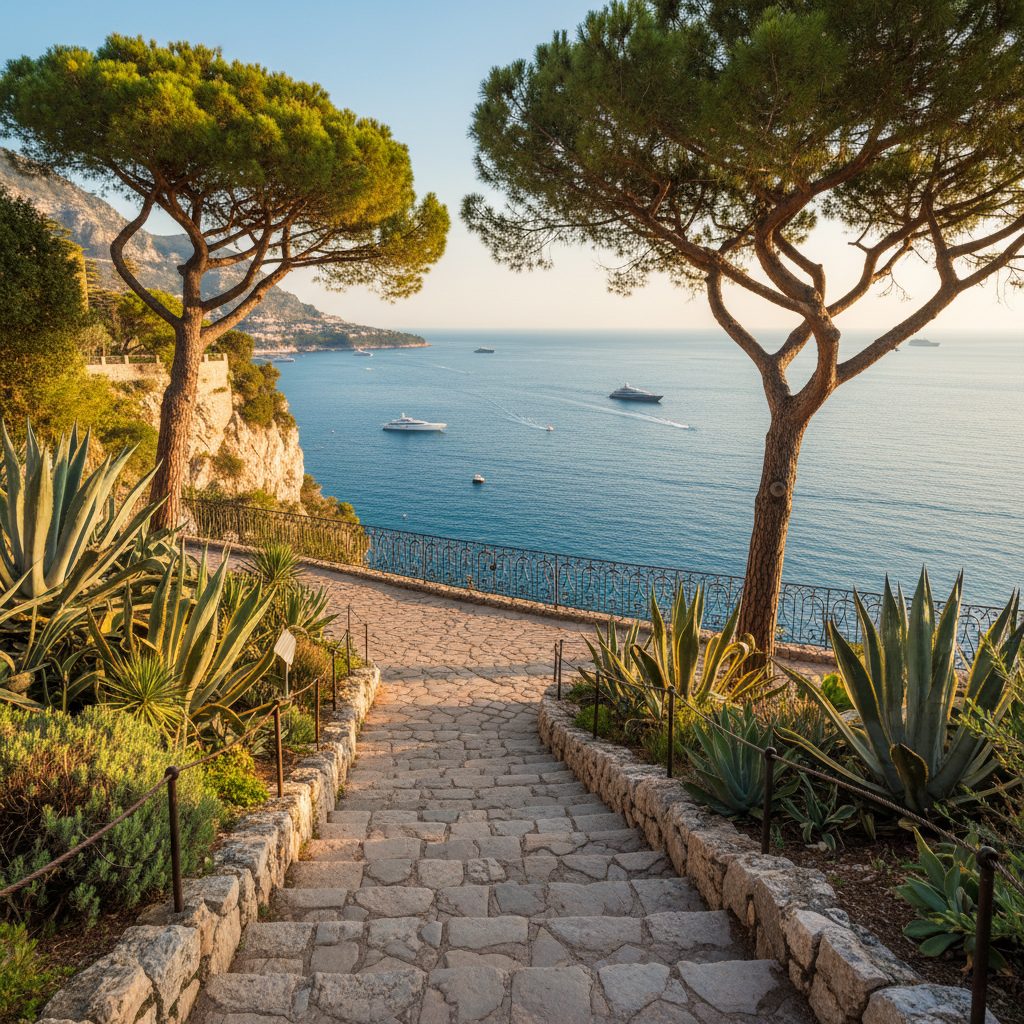
Right next to the Oceanographic Museum, the Jardins Saint-Martin wrap around the southern edge of The Rock in a beautiful Mediterranean garden that clings to the cliff above the sea. This is one of the most peaceful walks in Monaco — a shaded path lined with Aleppo pines, agaves, succulents, and Mediterranean shrubs, with dramatic viewpoints every few hundred meters where you can look straight down at the turquoise water crashing against the rocks below.
The gardens contain several sculptures, a small chapel, and benches placed at the most scenic overlooks. On a clear day you can see the coast curving all the way to Cap-d'Ail and Beaulieu-sur-Mer. The walk takes about 20–30 minutes end to end and connects the Oceanographic Museum area with the southern end of Monaco-Ville. It's completely free and rarely crowded — a genuine hidden gem.
Stop 11: Fontvieille & Princess Grace Rose Garden (4:00 PM)
Descend from The Rock on the western side to reach the Fontvieille district — Monaco's newest neighborhood, built on land reclaimed from the sea in the 1980s. The main attraction here is the Roseraie Princesse Grace, a beautiful rose garden created in 1984 as a tribute to Princess Grace. It contains over 8,000 rose bushes across 315 varieties, set around a small lake with ducks and surrounded by olive and palm trees. The peak bloom is in May and June, but the garden is lovely year-round.
The garden is free and makes for a relaxing 20-minute stroll. Fontvieille also houses several small museums (vintage cars, stamps, and the private collection of Prince Rainier III) if you have extra time, but they're not essential on a one-day visit.
Stop 12: Larvotto Beach — Afternoon Swim (4:30 PM)
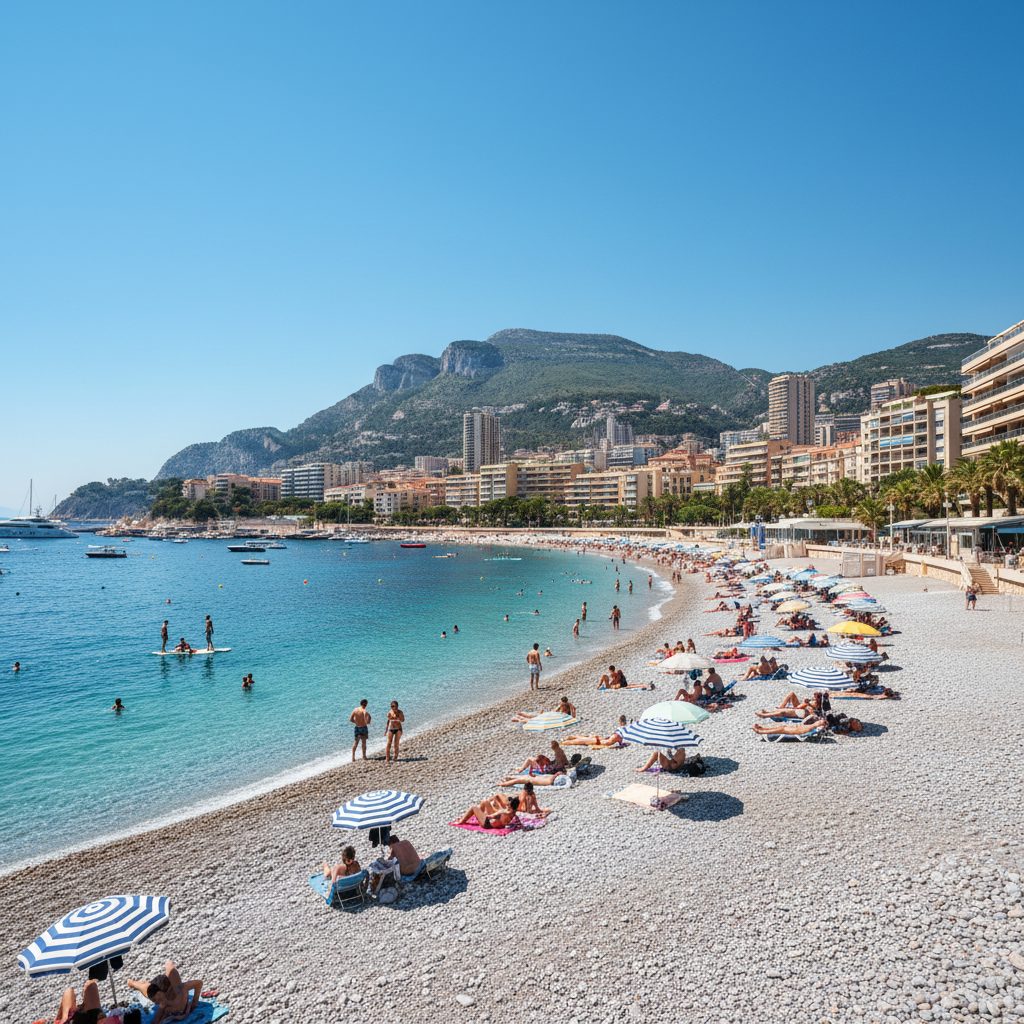
After a morning and afternoon of walking, you've earned a swim. Larvotto Beach is Monaco's main public beach — a crescent of fine gravel (not sand — this is the Riviera) with clean, warm, turquoise water and a gorgeous mountain backdrop. The beach is free, with paid lounger rentals available (€20–30 for a sunbed).
The water is clean and calm, perfect for a refreshing dip. There are several beach restaurants (including the upscale La Note Bleue with live jazz) if you want a drink or snack. The beach promenade is pleasant for a walk, and the water temperature is swimmable from late May through October. Even if you don't swim, sitting on the promenade watching the sunset light hit the mountains is a perfect way to decompress after a day of sightseeing.
Stop 13: Sunset Drinks at Casino Square (6:30 PM)
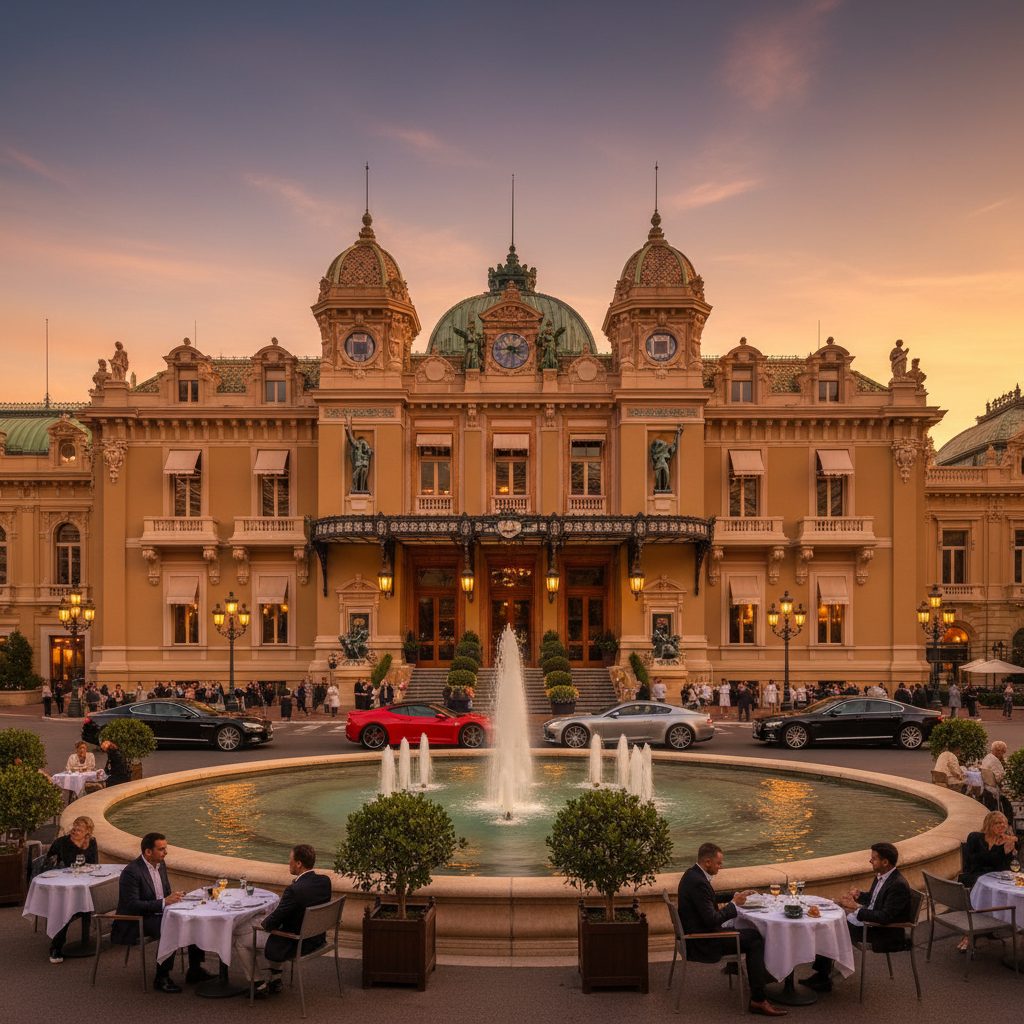
Return to Casino Square for the evening — the atmosphere at golden hour is completely different from the morning. The casino is lit up with warm spotlights, the luxury cars are back on display, and the Café de Paris terrace fills with well-dressed couples and groups enjoying aperitifs. Grab a table on the terrace of the Café de Paris or the Hôtel de Paris bar and order a drink while watching the Monte Carlo evening come to life.
Yes, drinks here are expensive (expect €15–20 for a cocktail, €8–12 for a beer). But this is one of those quintessential travel experiences — sitting in one of the most glamorous squares in the world with a glass in hand, watching supercars purr past in the fading light. It's the perfect way to cap off a day in Monaco. If you're dressed smartly enough (no shorts or sneakers), you can head inside the casino after 2 PM to explore the gaming rooms.
Dinner Options: Where to Eat in Monaco
For dinner, you have a range of options depending on your budget. If you want to keep costs reasonable, head back to the Condamine Market area where several restaurants offer set menus for €20–30. U Cavagnëtu on Rue Princesse Marie de Lorraine serves traditional Monégasque dishes at moderate prices. For a splurge, Le Louis XV at the Hôtel de Paris is Alain Ducasse's three-Michelin-star restaurant — one of the most celebrated in Europe (set menus from €280).
A good middle ground is dinner along the Port Hercule quayside, where restaurants like La Rascasse and Stars 'n' Bars offer main courses in the €20–35 range with harbor views. For Italian food (Monaco has a huge Italian influence), Ristorante Mozza in the Condamine serves excellent handmade pasta for around €18–25 per dish.
Practical Information & Tips
How Much Does a Day in Monaco Cost?
Monaco has a reputation for being impossibly expensive, and while the high end is truly stratospheric, a day visit is surprisingly manageable. Here's a realistic breakdown for a mid-range day:
Budget day (€40–60): Train from Nice (€8 return), Condamine Market lunch (€12), Oceanographic Museum (€18), free attractions all day (Casino Square, old town, gardens, beach, F1 circuit), return to Nice for dinner.
Mid-range day (€80–120): Add Palace State Apartments (€10), Casino entry (€17), a drink at Café de Paris (€15), and dinner at a portside restaurant (€30).
Splurge day (€200+): Add beach lounger rental, casino gambling budget, drinks at the Hôtel de Paris bar, and a fine-dining dinner.
Getting Around Monaco
Monaco is tiny — you can walk from one end to the other in about 40 minutes. There's no need for taxis or public transport for sightseeing. However, Monaco does have an excellent public bus system (€2 per ride) and a network of free public elevators and escalators built into the hillside that connect different levels of the city. These are incredibly useful for avoiding the steep climbs between the harbor, the old town, and Monte Carlo.
What to Wear
Monaco is dressier than most European cities. For daytime sightseeing, smart casual is fine — but avoid obvious beachwear (flip-flops, board shorts) if you plan to enter the casino, any of the upscale hotels, or dine at nicer restaurants. For the casino's gaming rooms, men need long trousers and closed shoes; women have more flexibility but smart attire is expected. Pack a light layer — even in summer, the hilltop areas can catch a breeze in the evening.
Safety
Monaco is one of the safest places in Europe — arguably the safest. The principality has more police and security cameras per capita than virtually anywhere else in the world. Violent crime is essentially nonexistent, and even petty theft is rare compared to nearby Nice or other Riviera towns. You can walk anywhere at any hour without concern.
Your 1-Day Monaco Itinerary at a Glance
9:00 AM — Casino Square & Monte Carlo gardens
9:45 AM — Japanese Garden
10:15 AM — Walk the F1 Grand Prix circuit
11:00 AM — Port Hercule & superyachts
11:30 AM — Condamine Market lunch
12:30 PM — Monaco-Ville old town
12:55 PM — Prince's Palace & Changing of the Guard
1:30 PM — Saint Nicholas Cathedral
2:00 PM — Oceanographic Museum
3:30 PM — Jardins Saint-Martin cliffside walk
4:00 PM — Princess Grace Rose Garden
4:30 PM — Larvotto Beach swim
6:30 PM — Sunset drinks at Casino Square
8:00 PM — Dinner
"Monaco proves that size has absolutely nothing to do with impact. In a single day you can walk through a medieval palace, trace the path of Formula 1 legends, peer into the deep ocean, swim in the Mediterranean, and sip cocktails in front of the world's most famous casino — all within a country you can cross on foot in under an hour."